.png?width=156&height=40&name=logo%20(1).png)
For decades, synthetic turf has transformed the way communities build, maintain, and use athletic fields. Schools, parks, and professional facilities alike have embraced turf for its ability to withstand heavy use, perform in all weather conditions, and provide a consistent playing surface year-round.
But as the industry has evolved, so has our understanding of what truly defines a high-quality field. It’s no longer just about what’s visible on the surface—it’s about what lies beneath it.
Today, engineers, architects, and safety experts largely agree on one thing:
Every sports field performs better—and more safely—with a pad underneath it.
More importantly, every athlete deserves to play on a surface designed with that level of care.
The Hidden Problem Beneath Turf Fields
At first glance, a synthetic turf field without a pad may appear perfectly functional. However, its long-term performance depends heavily on one unstable variable: infill.
Infill—typically made from rubber, sand, or alternative materials—is designed to provide cushioning and support. But unlike a fixed structural layer, infill is constantly in motion. It shifts with:
- Player activity and high-traffic zones
- Weather conditions like wind and rain
- Temperature fluctuations causing expansion and contraction
- Routine maintenance and grooming practices
As infill moves and compacts over time, the field’s ability to absorb impact diminishes. This leads to increased surface hardness, inconsistent footing, and unpredictable performance across different areas of the field.
The result? A surface that can vary not just year to year, but even from one sideline to the other.
What a Shock Pad Actually Does
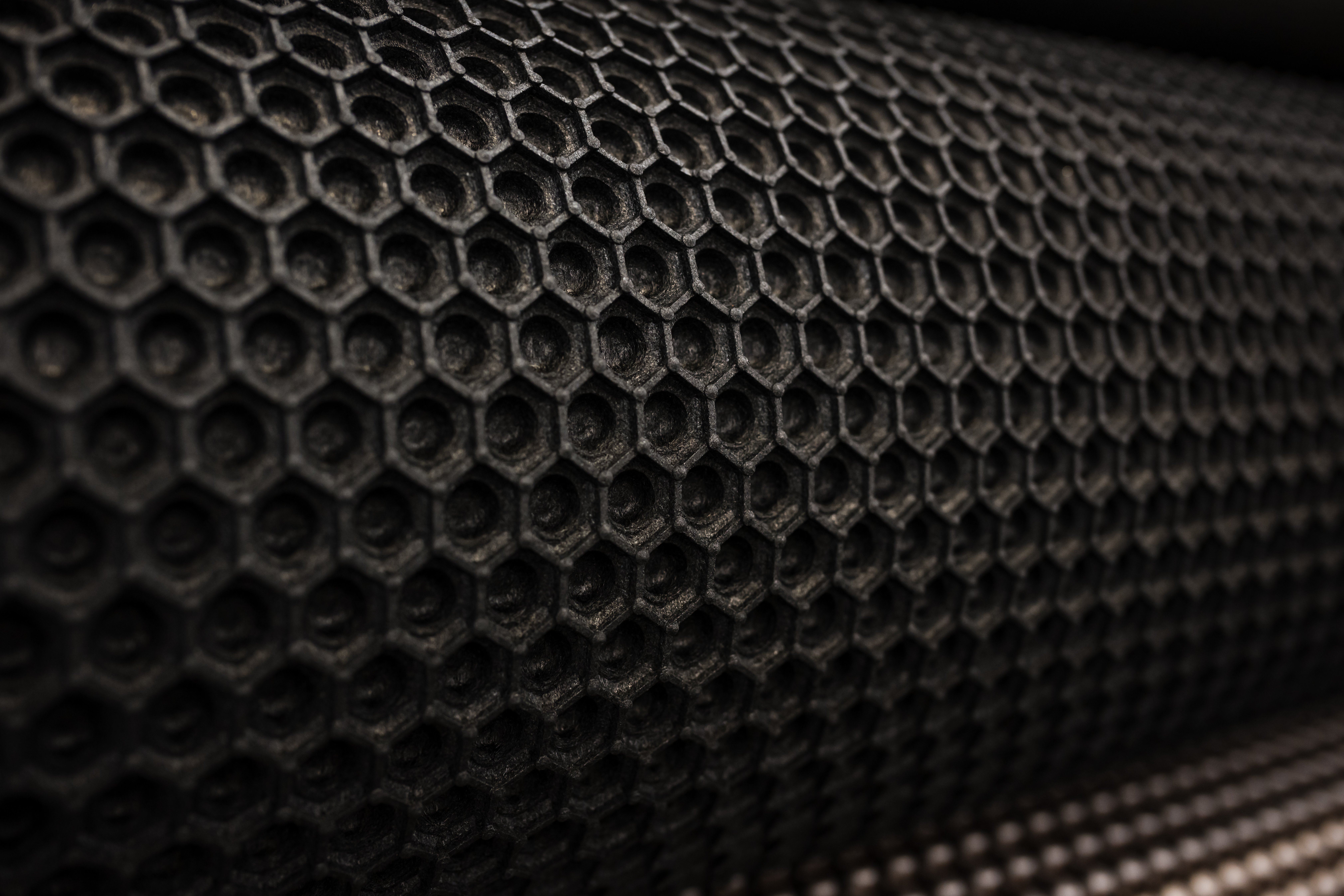
A shock pad is an engineered layer installed beneath the turf system, designed to provide consistent impact attenuation regardless of surface conditions. Think of it as the foundation that stabilizes everything above it.
Rather than relying solely on infill for cushioning, a shock pad:
- Absorbs and disperses impact forces to reduce stress on athletes’ joints
- Creates uniform performance across the entire field
- Maintains stability even as infill shifts or settles
- Supports proper energy return for athletic performance
This foundational layer ensures that the field behaves predictably, giving athletes confidence in every step, cut, and landing.
Safety Over Time: Where Pads Make the Biggest Difference
One of the most important—and often overlooked—benefits of a pad is how it protects performance over time.
Field safety is commonly measured using metrics such as:
- Gmax (surface hardness and shock absorption)
- HIC (Head Injury Criterion, related to concussion risk)
- Vertical deformation (how much the surface compresses under load)
On unpadded systems, these values tend to worsen as the field ages. As infill compacts and migrates, Gmax increases, meaning the surface becomes harder and less forgiving.
A shock pad changes that trajectory.
By providing a consistent cushioning layer, a pad helps:
- Slow the increase in Gmax over time
- Maintain safer impact thresholds longer
- Reduce variability in performance metrics across the field
- Extend the usable life of the system
In simple terms, a pad creates a wider safety margin—not just on day one, but throughout the entire lifespan of the field.
Consistency in Every Condition
Athletic fields are exposed to extreme environmental conditions. From intense summer heat to freezing winter temperatures, these factors can significantly affect how a field performs.
Without a pad, temperature swings can:
- Harden infill in cold weather
- Soften and destabilize it in high heat
- Accelerate wear and compaction
A shock pad acts as a stabilizing layer that minimizes these effects. It helps the field maintain more consistent performance regardless of climate, ensuring that athletes experience the same level of safety and responsiveness whether it’s August or January.
The Cost Barrier—And Why It’s Changing
Historically, shock pads have often been left out of field designs—especially for schools and municipalities. The reason wasn’t a lack of awareness, but cost.
Premium foam pad systems came with premium price tags, forcing decision-makers to choose between:
- Staying within budget
- Investing in long-term safety and performance
As a result, many fields across the country were built without pads, leaving athletes to play on surfaces that could have been significantly improved with a better foundation.
But that equation has shifted.
Advancements in material science and manufacturing have made it possible to deliver high-.jpg?width=256&height=148&name=En-Plast%20780%20Pad_FrontBack%20(1).jpg) performance pad systems at a more accessible price point. Solutions like the ShockDrain 780 AllSport P.A.D.—supported by TEPC material science—are designed to provide long-term durability, engineered consistency, and extended performance without the historic cost barrier.
performance pad systems at a more accessible price point. Solutions like the ShockDrain 780 AllSport P.A.D.—supported by TEPC material science—are designed to provide long-term durability, engineered consistency, and extended performance without the historic cost barrier.
This means communities no longer have to compromise.
From Luxury to Standard of Care
The conversation around sports field construction is changing. What was once considered an optional upgrade is now increasingly viewed as a baseline requirement.
A shock pad is no longer a luxury reserved for elite facilities—it is becoming a standard of care for any organization committed to athlete safety and field performance.
When you consider the full lifecycle of a field, the benefits are clear:
- More consistent playability
- Improved safety metrics over time
- Reduced reliance on infill maintenance
- Greater long-term value
Every Athlete Deserves a Better Foundation
At its core, this isn’t just about materials or construction methods—it’s about people.
Athletes at every level, from youth sports to professional competition, rely on the surfaces beneath them. Every sprint, jump, and tackle places trust in the field to perform safely and consistently.
A shock pad ensures that trust is well placed.
Every field deserves a better foundation.
And every athlete deserves to play on one.
.png?width=470&height=98&name=P.A.D.%20Campaign%20Logo%20(8).png)