.png?width=156&height=40&name=logo%20(1).png)
One of the biggest challenges in the sports surfacing industry is end-of-life waste. Adopting circular design principles for sports surfacing helps reduce that burden. Traditional shock pad materials—such as polyurethane-bound layers or expanded foams—are often chemically crosslinked or structurally degraded by the time they are removed. This makes recycling difficult, costly, or impractical.
As a result, many fields ultimately contribute significant material to landfills.
TEPC breaks this cycle.
As a thermoplastic elastomer polyolefin composite, TEPC retains the ability to be reshaped and reused even after years of service. At the end of its lifecycle, TEPC-based products can be processed as recycled sports field sports field materials and can be:
- Reprocessed into raw material
- Remelted without significant loss of properties
- Re-formed into new components
- Reintroduced into manufacturing streams
This opens the door to true circularity—where materials are not discarded, but continuously reused. In this context, a TEPC thermoplastic shock pad preserves material value while supporting future reuse.
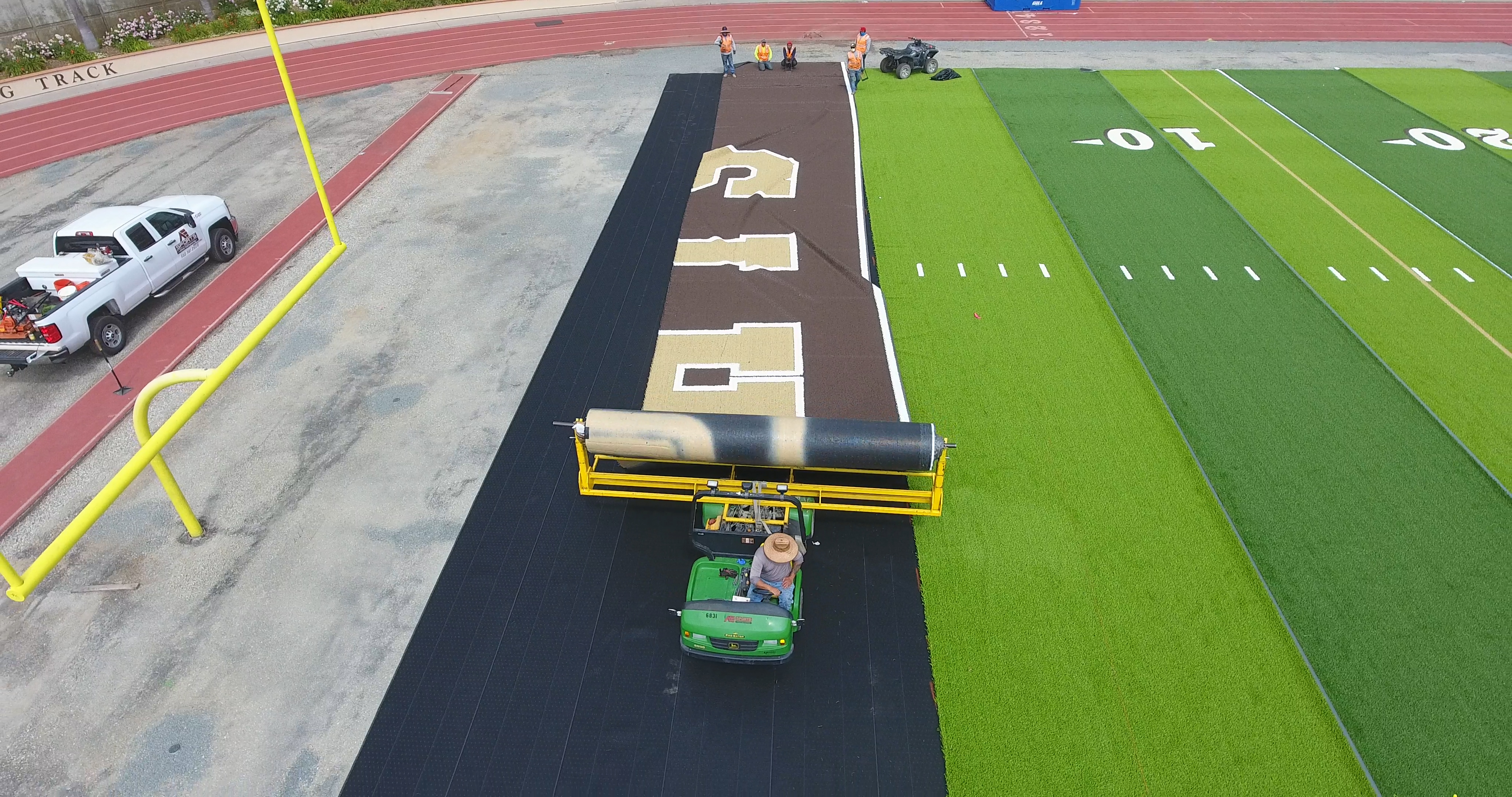
 In practical terms, a product like the 780 AllSport P.A.D. is not just a long-lasting solution (with a documented shock pad lifespan of up to 25 years), but also a recoverable asset at the end of its use. This significantly reduces landfill dependency and supports sustainability goals at the community level.
Long-Term Performance: Where TEPC Stands Apart
Durability in sports fields is not just about how long a product lasts—it’s about how consistently it performs over time.
Traditional shock pads rely on mechanisms that degrade:
- Foam systems depend on trapped gas pockets, which compress, collapse, or shift with repeated use.
- Urethane-bound systems depend on chemical bonds that can break down due to environmental exposure, leading to hardening or inconsistency.
TEPC operates differently.
Because it is a solid-state thermoplastic elastomer composite, its performance is based on material structure rather than internal air or chemical curing. This provides a more predictable mechanical response under load.
Over millions of impact cycles, TEPC maintains:
- Consistent shock absorption
- Stable energy return
- Reduced performance drift due to temperature fluctuations
- Resistance to long-term fatigue
This stability becomes especially important during the second lifecycle of a field—when turf has been replaced, but the underlying pad must continue to perform. TEPC’s resilience ensures that safety and playability are not compromised over time, helping deliver sustainable synthetic turf systems without sacrificing performance.
The Power of Geometry: TEPC Meets Honeycomb Design
Material innovation alone is not enough. The way a material is structured plays an equally important role in performance.
TEPC reaches its full potential when paired with one of nature’s most efficient structural forms: the honeycomb.
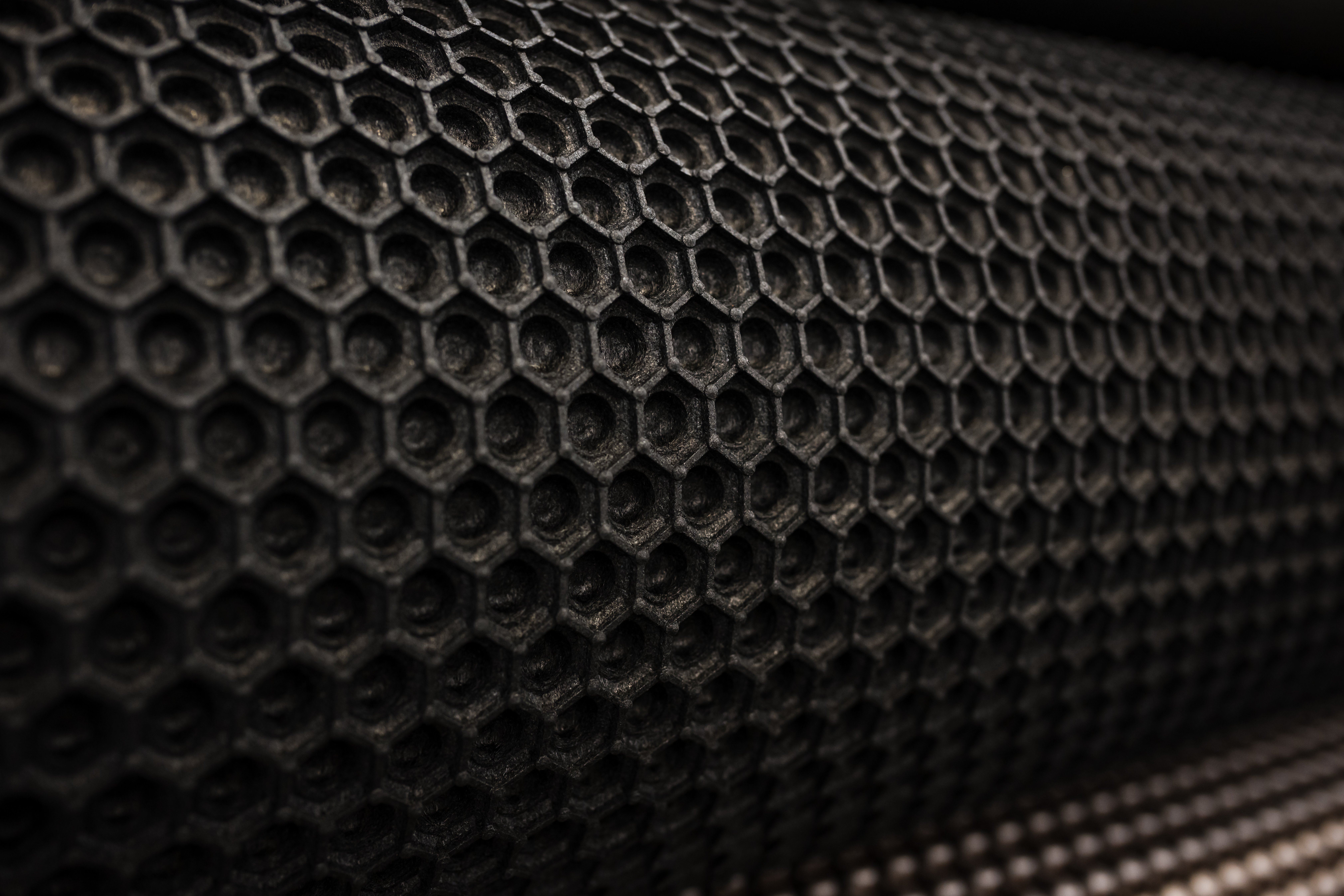
In advanced P.A.D. systems like the 780 AllSport platform, TEPC is molded into a network of triangular and hexagonal geometries, creating a honeycomb pad sports field profile. This design delivers several critical benefits:
- Even distribution of impact forces across the surface
- High strength-to-weight efficiency
- Built-in channels for consistent drainage
- Structural integrity that resists deformation over time
Unlike flat or randomly structured pads, honeycomb geometry ensures that performance is not only strong—but repeatable across the entire field.
The result is a system defined by three types of stability:
- Stable material (TEPC)
- Stable structure (engineered geometry)
- Stable performance (long-term consistency)
Together, these create a foundation for safer and more reliable athletic surfaces.
Supporting Modern Sustainability Goals
Sustainability is no longer optional in sports construction—it is increasingly a requirement. Schools, cities, and organizations are being asked to justify their environmental decisions, not just their budgets.
TEPC helps meet these expectations in several ways:
- Reduces landfill waste through recyclability
- Extends product lifespan, minimizing replacement cycles
- Supports circular material use and resource efficiency
- Lowers long-term environmental impact without sacrificing performance
What makes TEPC particularly valuable is that it does not force a trade-off. Too often, sustainable solutions come at the expense of durability or safety. TEPC aligns all three—performance, longevity, and environmental responsibility, helping owners specify a thermoplastic shock pad as part of sustainable synthetic turf projects.
Circularity Is the Future—And TEPC Is Ready for It
The industry is moving toward a circular model, where materials are designed with their next life in mind. This shift is being driven by regulation, environmental awareness, and long-term cost considerations.
In this context, TEPC stands out as a forward-compatible solution.
It is not just designed for today’s fields—it is designed for tomorrow’s expectations:
- Materials that can be recovered and reused
- Systems that maintain performance over decades
- Designs that reduce total lifecycle impact
Circularity is not a passing trend—it is the direction the industry is heading.
And TEPC is one of the first materials truly capable of supporting that future at scale.